Moss wall art: adding soft natural texture indoors
What makes moss wall pieces different from other wall decor
Most wall decor adds something visual: a color, a shape, a pattern. Moss wall pieces add something else entirely, a surface you can almost feel before you touch it. The texture is soft, dense, and irregular in a way that painted canvas or printed paper can't mimic. That quality is what draws people to preserved moss in the first place. It brings a living, breathing feel into a room without the upkeep of live plants.
Preserved moss is not the same as dried moss. Dried moss becomes brittle and loses its color within weeks. Preserved moss goes through a process that replaces the natural moisture with a plant-safe solution, usually glycerin and a little dye to keep the color stable. The result is a material that stays soft and springy for years. It does not need water, soil, or sunlight. That makes it a practical choice for rooms where live plants struggle: a north-facing hallway, a windowless bathroom, or a shelf above a radiator.
How preserved moss keeps its look
The preservation process is the key to everything. Once the moss is harvested (always from renewable sources, because it regrows quickly), it is cleaned, dried, and then soaked in a preservation bath. The glycerin replaces the water inside the cells, which stops the moss from decaying. A small amount of food-grade dye restores or enhances the natural green. The finished preserved moss artwork that comes from this process can hold its color and softness for several years with almost no care.
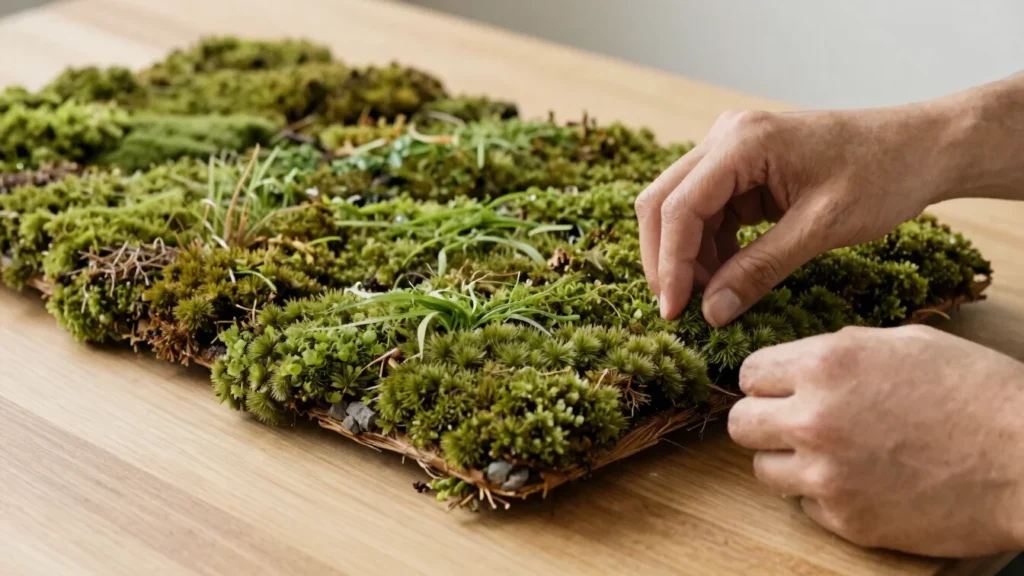
Different moss types behave differently after preservation. Sheet moss stays flat and tends to hold a brownish-green tone. It works well as a base layer, covering the backing board and hiding the glue lines. Cushion moss is thicker and rounder, giving a bumpy, padded look. Reindeer moss is the most popular choice for moss wall pieces because it is branching and airy. It comes in a wide range of colors, from deep forest green to lime, olive, and even muted blues and yellows. Because reindeer moss is naturally pale, it takes dye very evenly.
What to consider before you start
Moss wall pieces are not all the same weight. A large piece covered in dense cushion moss can be surprisingly heavy. The backing board, usually plywood or MDF, adds to the load. Before hanging anything larger than about two square feet, check that your wall can support it. Drywall with hollow-wall anchors is fine for medium sizes. For anything large, you want to find a stud or use a French cleat system. The last thing you need is a piece pulling itself off the wall after a week.
Humidity is another factor. Preserved moss does not need misting, but it does not like constant damp either. Bathrooms with poor ventilation can cause the moss to sweat or the dye to bleed a little. A steamy shower once a day is usually fine. A perpetually wet wall from a leaking pipe is not. Keep the moss away from direct heat sources and vents. Hot, dry air will make the moss brittle over time, just as it would a leather sofa.
Light exposure
Direct sunlight is the enemy of preserved moss. UV rays will fade the dye in a matter of months, especially on lighter colors like lime green or yellow. If you want to hang moss wall pieces near a window, choose a spot that gets indirect light. North-facing windows are ideal. South-facing windows with strong afternoon sun will bleach the color out unevenly. Some manufacturers add a UV inhibitor to their preservation mix, but it only slows the fading, it does not stop it.
Ways to style moss wall pieces
The most common approach is a single large panel of moss in a simple wood frame. The frame hides the edges and gives the piece a clean, finished look. Dark walnut or black frames work well with deep green moss. Light oak or white frames suit brighter, more varied colors. The moss itself can be left in a solid color or arranged in patterns. Some people like a gradient from dark green at the bottom to light green at the top, which mimics the way moss grows in nature. Others prefer a patchwork of different moss types and colors for a more eclectic feel.
Another option is to combine moss with other preserved botanicals. Ferns, eucalyptus, and dried flowers can add height and variety. The moss becomes the backdrop or the filler, while the taller elements draw the eye. This works especially well in narrow, vertical pieces meant for tight spaces between windows or next to a door.
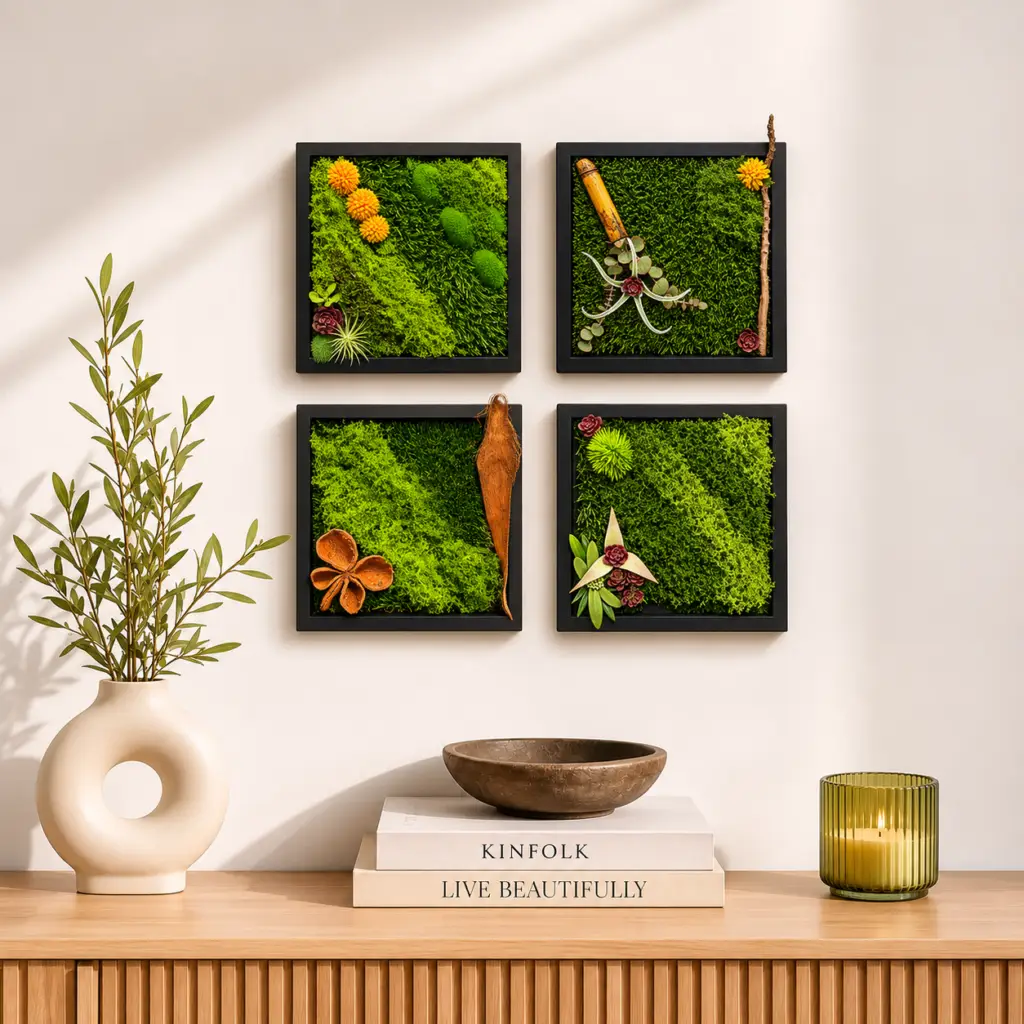
For those who want something smaller, a series of mini moss panels arranged in a grid can be very effective. Each panel holds a different moss color or type. The repetition of squares or rectangles creates a modern, orderly look that still has the organic texture of the moss. A set of three or four panels hung in a vertical line can fill a tall, empty wall without overwhelming the room.
What about maintenance
Preserved moss does not need much, but it does need a little. Dust will settle on the surface over time. The best way to clean it is with a soft brush or a hair dryer on the cool, low setting. Gently blow the dust off rather than rubbing it in. Do not use water, cleaning sprays, or a vacuum cleaner. The moss is not waterproof, and the suction can pull pieces loose.
If the moss gets knocked or dented, you can often fluff it back into shape with your fingers. Cushion moss and reindeer moss are springy enough to recover. Sheet moss is more fragile and may show a permanent dent. That is one reason why reindeer moss is so popular for high-traffic areas, it bounces back.
When to replace
After two to four years, the color will start to fade gently. The moss will also become dustier and a little harder to clean. At that point, you can either replace the whole panel or, if the backing board is still in good shape, replace just the moss. Some people see the fading as part of the charm and keep the piece up long after the original green has softened to a muted olive. There is no rule that says you have to change it.
Choosing a finished piece or making your own
A ready-made moss wall piece is the simplest route. You pick a size and a color, and it arrives already mounted in a frame. The finished preserved moss artwork is sealed and ready to hang. This is a good option if you want a precise shape or a specific color match. The downside is that you are limited to what is available off the shelf.
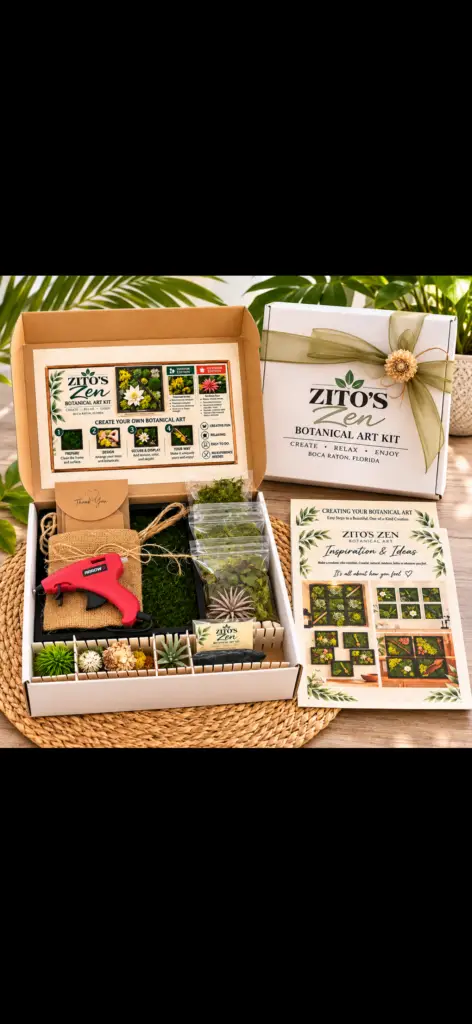
If you want something custom, a kit gives you the moss, the adhesive, and the backing board. You arrange the moss yourself. The process is not difficult: you spread a layer of adhesive on the board, press the moss into place, and let it cure. The main skill is patience. Moss does not always stay where you put it the first time. You may need to work in small sections, holding the moss down for a few seconds until the adhesive grabs. The result is a piece that is exactly what you wanted, down to the last tuft of reindeer moss.
Where moss wall pieces fit best
Moss wall pieces work well in spaces that feel a little sterile. A home office with white walls and a glass desk can feel cold. A moss panel adds warmth without clutter. In a bedroom, a moss headboard or a small piece above the bed can make the room feel more restful. The soft texture absorbs a little sound too, which is a nice bonus in a room with hard floors.
Commercial spaces have picked up on this as well. Cafes, lobbies, and reception areas use moss to make the space feel more welcoming. The fact that it requires no water or soil makes it practical for businesses that do not want to pay for plant maintenance. A large moss wall behind a reception desk can be a striking feature that costs nothing to keep after installation.
Final practical notes
If you are hanging multiple moss pieces together, give each one a little breathing room. An inch or two between panels keeps the eye from feeling crowded. The same rule applies to mixing moss with other wall art. Let the moss be the soft element among harder surfaces. A photograph in a metal frame next to a moss panel creates a nice contrast between cold and warm, sharp and soft.
Moss wall pieces are not a trend that will fade next season. The look has been around for years in interior design magazines and high-end lobbies. What has changed is the availability of preserved moss in kit form, which makes the look accessible to anyone who can handle a few basic tools. The result is a wall that feels alive without the work of keeping it alive.